


In men over 50, the prostate can enlarge and cause bothersome urinary symptoms such as a weak stream, frequent urges to urinate, and the sensation of incomplete bladder emptying.
In Canada, available treatments to relieve symptoms include medication, Rezūm water-vapour therapy, or transurethral resection of the prostate (TURP). The choice depends on symptom severity and prostate size to improve daily comfort and quality of life.
The diagnosis of benign prostatic hyperplasia (BPH) is made at the Marois Clinics following a comprehensive evaluation. The physician begins by reviewing medical history and discussing urinary symptoms, then performs a rectal examination to estimate prostate size. Additional tests may be ordered as needed: uroflowmetry to measure urinary flow, ultrasound to assess prostate volume, cystoscopy to inspect the urethra and bladder, and urodynamic studies to analyse urinary function.
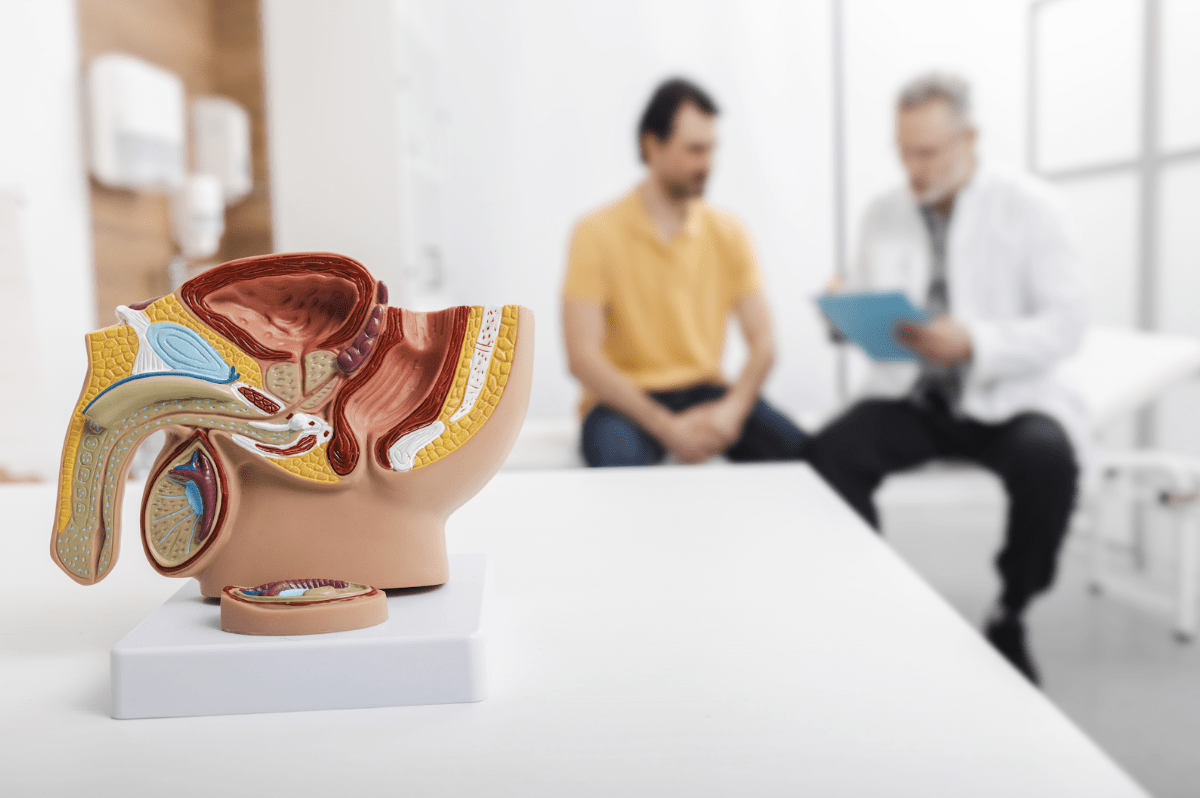
This process helps determine the type and severity of symptoms and their impact on quality of life—key information for guiding treatment decisions. Treatment follows a stepwise approach, starting with the least invasive options, such as medication, to relieve symptoms while limiting risks. If symptoms persist or worsen, more direct interventions such as Rezūm water-vapour therapy or TURP may be recommended. This progressive approach allows treatment to be tailored to each patient, considering not only symptom severity but also the main goal: improving comfort and overall quality of life.
Medication is the first-line treatment for benign prostatic hyperplasia in cases of mild to moderate symptoms and moderate prostate size. There are two main classes:
Treatment is non-invasive and straightforward, without the need for hospitalization.
Medication can cause side effects such as low blood pressure, sexual dysfunction or fatigue. Effectiveness varies based on the degree of obstruction. Regular monitoring of symptoms is essential. If symptoms persist, a more direct treatment may be considered.
Rezūm therapy uses natural thermal energy—water vapour. Injected directly into the prostate tissue to block urine flow, it gradually reduces prostate volume. This targeted process helps open the urinary passage while preserving surrounding tissues.
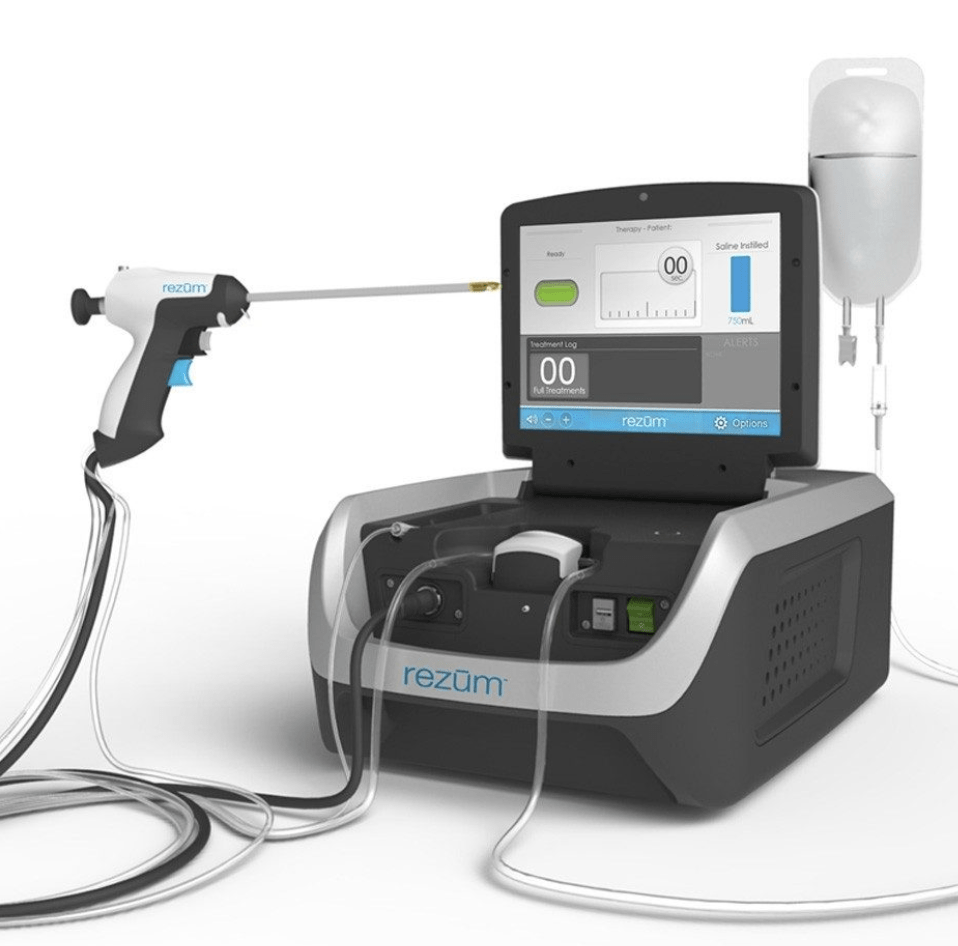
The procedure is short and performed in the clinic under local anaesthesia. It usually takes only a few minutes, and the patient goes home the same day. Recovery is quick, with a return to normal activities shortly afterward. Rezūm is minimally invasive, carries limited risks, causes little postoperative discomfort, and preserves sexual function. It is ideal for men for whom medication is insufficient but who wish to avoid major surgery.
This surgical procedure is commonly performed in hospitals. It involves removing the portion of the prostate obstructing urinary flow by entering through the urethra, without external incisions. The goal is to clear the urinary channel and improve flow. This technique is generally recommended when the prostate is large, urinary symptoms are significant, or medication or Rezūm have not provided satisfactory results. TURP remains a reference treatment thanks to its long-lasting effectiveness, supported by decades of clinical studies. It provides consistent and stable relief for most patients.
However, it requires a short hospital stay and a recovery period. Like any intervention, it carries minimal potential risks such as ejaculatory changes, temporary incontinence, or urinary infection. Technological advances have increased the precision and safety of this surgery. Several variants of TURP now exist, including the use of different devices or laser energy depending on prostate size.
At Marois Clinics, the technique is chosen based on prostate volume.
To help clarify the advantages and limitations of each option, the table below compares the most relevant clinical criteria when choosing a treatment for prostate enlargement.
| Criterion | Medication | Rezūm | TURP |
| Patient profile | Mild to moderate symptoms, medium-sized prostate, prefers a non-invasive option | Patients for whom medication is insufficient and who want to avoid major surgery | Larger prostate, severe symptoms, failure of less invasive options |
| Symptom severity | Mild to moderate | Moderate to severe | Severe or resistant to previous treatments |
| Prostate volume | Small to medium | Small to medium | Medium to large |
| Recovery | Fast, outpatient treatment | Fast, return to activities in a few days | Longer recovery and hospital stay required |
| Risk tolerance | Possible but limited side effects | Low and temporary risks | Higher surgical risks (bleeding, ejaculatory changes), but maximum effectiveness |
The choice of the optimal treatment always depends on a personalized assessment performed by the urologist at Marois Clinics in Montréal, on the South Shore, in Joliette, Greater Montréal, Laval, and Québec City. This assessment considers overall health, prostate volume, and patient expectations to determine the most appropriate approach.
Error: Contact form not found.